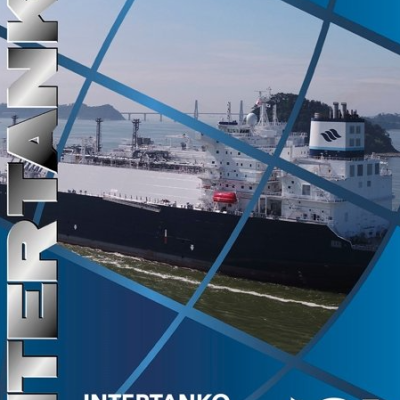
Guide to LNG Chartering

  • EDITION : 2021

  • PUBLISHER: INTERTANKO

  • LANGUAGE: ENGLISH

  • This Guide has been developed to provide readers with an overview of the commercial and legal aspects of the carriage of liquefied natural gas (LNG) by sea.

  • Vessel inspections and LNG STS operations are covered in the context of relevant contractual clauses.

  • The book assumes an understanding of oil tanker principles and charterparty terms, but lays out the intricacies of gas chartering to those seeking a deeper understanding of the subject.

  • This Guide provides practical assistance to commercial teams in the growing LNG shipping markets, at a time when the LNG industry is moving substantially away from its traditional structures and contract matrices.

  • The book deals only with international seaborne carriage of LNG on large vessels.

  • It does not cover small scale LNG or coastal/cabotage movement, nor does it cover floating storage and regasification unit (FSRU) or floating LNG production (FLNG) contracts.

  • It is appended with charterparty clauses from ShellLNGTime 1, ShellLNGTime 2 and LNGVOY.

A Guide for Correct Entries in the ORB Part I – Machinery Space Operations

  • EDITION : 4th,2021

  • PUBLISHER: INTERTANKO

  • LANGUAGE: ENGLISH

  • This is a guide to completion of the Oil Record Book (Part I – Machinery space operations) to ensure compliance with IMO requirements.

  • It provides instruction on correct record keeping, listing the types of operation that must be recorded and highlighting common failures and errors.

  • It also includes Flag Administration requirements and is structured to facilitate integration in the document management system of any individual member of INTERTANKO.

  • This fourth edition of Part I of the ORB retains the structure of the previous edition and contains: Instructions and interpretations on how to properly record all related operations in accordance with MARPOL 73/78, Annex I, Regulation 17. A list of operations to be recorded. Frequently found failures or mistakes. Detailed examples for all related operations.

A Guide for Correct Entries in the ORB Part II – Cargo/Ballast Operations

  • EDITION : 2nd,2021

  • PUBLISHER: INTERTANKO

  • LANGUAGE: ENGLISH

  • This publication provides guidance on proper and consistent completion of the Oil Record Book (Part II – Cargo/Ballast Operations) for oil tankers, as stipulated by Regulation 36 and Appendix III of Annex I of MARPOL 73/78.

  • It sets out instructions and general requirements for making entries in the ORB Part II and lists the items that must be recorded.

  • It also contains example entries for commonly used cargo/ballast operations.

  • It provides simple and clear advice and guidance for making entries in the ORB Part II with the aim of: Ensuring compliance with the relevant MARPOL Annex I requirements Facilitating and simplifying the onboard work of the responsible officers and the Master Ensuring uniform and consistent ORB Part II recordkeeping that is aligned with and compatible with other shipboard logbooks and records

Guide to the Vetting Process

  • EDITION : 14th,2021

  • PUBLISHER: INTERTANKO

  • LANGUAGE: ENGLISH

  • The purpose of this guide by Intertanko is to assist a vessel’s staff to prepare both themselves and the vessel for a ship inspection.

  • Each ship owner, ship management company/operator or technical manager, referred to from here on in this Guide as “the company” should, under their own Safety Management System (SMS), have their own allocations of such responsibilities onboard.

  • Vessels’ Practical Guide to Vetting (formerly Seafarers’ Guide to Vetting Inspections) is the result of an INTERTANKO Vetting Committee initiative and has been written for all Officers and crew on board to enable them to better understand the content and requirements of the SIRE Vessel Inspection Questionnaire (VIQ).

  • This Guide should be used in conjunction with the latest edition of the OCIMF-SIRE VIQ.

Guide to Port State Control

  • EDITION : 3rd,2021

  • PUBLISHER: INTERTANKO

  • LANGUAGE: ENGLISH

  • Port State Control (PSC) is the inspection of foreign ships in national ports to verify that the condition of the ship and its equipment complies with the requirements of international regulations, and that the ship is manned and operated in compliance with these rules.

  • Many of the IMO’s most important technical conventions contain provisions for ships to be inspected when they visit foreign ports to ensure that they meet IMO requirements.

  • The responsibility for ships’ standards rests with owners, Class Societies and the Flag State – but Port State Control (PSC) provides a “safety net” to identify substandard ships which experience has shown to be extremely effective.

  • The first PSC agreement to identify and exclude substandard ships was drafted after the Amoco Cadiz incident in March 1978 and resulted in the Paris Memorandum of Understanding (MoU), which came into effect in Europe in 1982.

  • There are now nine regional agreements on Port State Control in effect, which cover Europe and the north Atlantic (Paris MoU); Asia and the Pacific (Tokyo MoU); Latin America (Acuerdo de Viña del Mar); the Caribbean (Caribbean MoU); West and Central Africa (Abuja MoU); the Black Sea region (Black Sea MoU); the Mediterranean (Mediterranean MoU); the Indian Ocean (Indian Ocean MoU); and the Persian Gulf (Riyadh MoU).

  • The United States Coast Guard maintain the tenth PSC regime. The shipping industry has made considerable progress and continues to do so, but incidents show that there are still ships that slip through the net.

  • It is these ships that PSC targets through sharing of data and improved training of inspectors to strengthen their abilities and better direct their efforts. INTERTANKO’s Membership has long recognised the value of well-operated and maintained tankers and has developed criteria to ensure its own quality standards.

  • Alongside the Membership criteria, the Association and its Vetting Committee have supported owners through the production of a Guide to the Vetting Process which includes advice on both the PSC and commercial vetting processes for tankers.

Seafarers’ Practical Guide to SIRE 2.0 Inspections

  • EDITION : 1st,2023

  • PUBLISHER: INTERTANKO

  • LANGUAGE: ENGLISH

  • The Seafarers’ Practical Guide to SIRE 2.0 Inspections has been written for all Officers and crew on board to enable them to better understand the content and requirements of the SIRE 2.0 Vessel Inspection Questionnaire.

  • This publication follows each chapter of the SIRE 2.0 Inspection Questionnaire and provides guidance on the responsibilities for each question.

  • The guide compiles and summarises the inspection guidance, the suggested Inspector actions, the expected evidence and the potential grounds for a negative observation for each and every question as they are outlined in the OCIMF question libraries.