IMO & Safety Signs

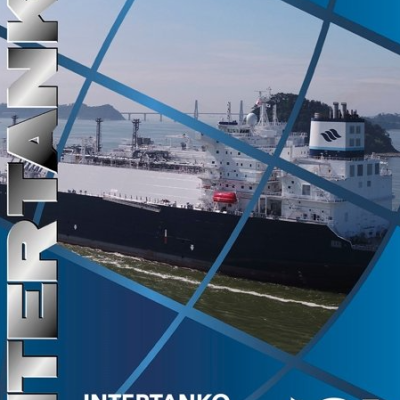
Guide to LNG Chartering

  • EDITION : 2021

  • PUBLISHER: INTERTANKO

  • LANGUAGE: ENGLISH

  • This Guide has been developed to provide readers with an overview of the commercial and legal aspects of the carriage of liquefied natural gas (LNG) by sea.

  • Vessel inspections and LNG STS operations are covered in the context of relevant contractual clauses.

  • The book assumes an understanding of oil tanker principles and charterparty terms, but lays out the intricacies of gas chartering to those seeking a deeper understanding of the subject.

  • This Guide provides practical assistance to commercial teams in the growing LNG shipping markets, at a time when the LNG industry is moving substantially away from its traditional structures and contract matrices.

  • The book deals only with international seaborne carriage of LNG on large vessels.

  • It does not cover small scale LNG or coastal/cabotage movement, nor does it cover floating storage and regasification unit (FSRU) or floating LNG production (FLNG) contracts.

  • It is appended with charterparty clauses from ShellLNGTime 1, ShellLNGTime 2 and LNGVOY.

A Guide for Correct Entries in the ORB Part I – Machinery Space Operations

  • EDITION : 4th,2021

  • PUBLISHER: INTERTANKO

  • LANGUAGE: ENGLISH

  • This is a guide to completion of the Oil Record Book (Part I – Machinery space operations) to ensure compliance with IMO requirements.

  • It provides instruction on correct record keeping, listing the types of operation that must be recorded and highlighting common failures and errors.

  • It also includes Flag Administration requirements and is structured to facilitate integration in the document management system of any individual member of INTERTANKO.

  • This fourth edition of Part I of the ORB retains the structure of the previous edition and contains: Instructions and interpretations on how to properly record all related operations in accordance with MARPOL 73/78, Annex I, Regulation 17. A list of operations to be recorded. Frequently found failures or mistakes. Detailed examples for all related operations.

A Guide for Correct Entries in the ORB Part II – Cargo/Ballast Operations

  • EDITION : 2nd,2021

  • PUBLISHER: INTERTANKO

  • LANGUAGE: ENGLISH

  • This publication provides guidance on proper and consistent completion of the Oil Record Book (Part II – Cargo/Ballast Operations) for oil tankers, as stipulated by Regulation 36 and Appendix III of Annex I of MARPOL 73/78.

  • It sets out instructions and general requirements for making entries in the ORB Part II and lists the items that must be recorded.

  • It also contains example entries for commonly used cargo/ballast operations.

  • It provides simple and clear advice and guidance for making entries in the ORB Part II with the aim of: Ensuring compliance with the relevant MARPOL Annex I requirements Facilitating and simplifying the onboard work of the responsible officers and the Master Ensuring uniform and consistent ORB Part II recordkeeping that is aligned with and compatible with other shipboard logbooks and records

Guide to the Vetting Process

  • EDITION : 14th,2021

  • PUBLISHER: INTERTANKO

  • LANGUAGE: ENGLISH

  • The purpose of this guide by Intertanko is to assist a vessel’s staff to prepare both themselves and the vessel for a ship inspection.

  • Each ship owner, ship management company/operator or technical manager, referred to from here on in this Guide as ā€œthe companyā€ should, under their own Safety Management System (SMS), have their own allocations of such responsibilities onboard.

  • Vessels’ Practical Guide to Vetting (formerly Seafarers’ Guide to Vetting Inspections) is the result of an INTERTANKO Vetting Committee initiative and has been written for all Officers and crew on board to enable them to better understand the content and requirements of the SIRE Vessel Inspection Questionnaire (VIQ).

  • This Guide should be used in conjunction with the latest edition of the OCIMF-SIRE VIQ.

Guide to Port State Control

  • EDITION : 3rd,2021

  • PUBLISHER: INTERTANKO

  • LANGUAGE: ENGLISH

  • Port State Control (PSC) is the inspection of foreign ships in national ports to verify that the condition of the ship and its equipment complies with the requirements of international regulations, and that the ship is manned and operated in compliance with these rules.

  • Many of the IMO’s most important technical conventions contain provisions for ships to be inspected when they visit foreign ports to ensure that they meet IMO requirements.

  • The responsibility for ships’ standards rests with owners, Class Societies and the Flag State – but Port State Control (PSC) provides a “safety net” to identify substandard ships which experience has shown to be extremely effective.

  • The first PSC agreement to identify and exclude substandard ships was drafted after the Amoco Cadiz incident in March 1978 and resulted in the Paris Memorandum of Understanding (MoU), which came into effect in Europe in 1982.

  • There are now nine regional agreements on Port State Control in effect, which cover Europe and the north Atlantic (Paris MoU); Asia and the Pacific (Tokyo MoU); Latin America (Acuerdo de ViƱa del Mar); the Caribbean (Caribbean MoU); West and Central Africa (Abuja MoU); the Black Sea region (Black Sea MoU); the Mediterranean (Mediterranean MoU); the Indian Ocean (Indian Ocean MoU); and the Persian Gulf (Riyadh MoU).

  • The United States Coast Guard maintain the tenth PSC regime. The shipping industry has made considerable progress and continues to do so, but incidents show that there are still ships that slip through the net.

  • It is these ships that PSC targets through sharing of data and improved training of inspectors to strengthen their abilities and better direct their efforts. INTERTANKO’s Membership has long recognised the value of well-operated and maintained tankers and has developed criteria to ensure its own quality standards.

  • Alongside the Membership criteria, the Association and its Vetting Committee have supported owners through the production of a Guide to the Vetting Process which includes advice on both the PSC and commercial vetting processes for tankers.

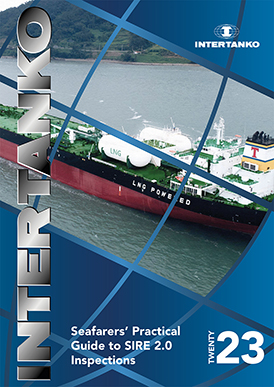
Seafarers’ Practical Guide to SIRE 2.0 Inspections

  • EDITION : 1st,2023

  • PUBLISHER: INTERTANKO

  • LANGUAGE: ENGLISH

  • The Seafarers’ Practical Guide to SIRE 2.0 Inspections has been written for all Officers and crew on board to enable them to better understand the content and requirements of the SIRE 2.0 Vessel Inspection Questionnaire.

  • This publication follows each chapter of the SIRE 2.0 Inspection Questionnaire and provides guidance on the responsibilities for each question.

  • The guide compiles and summarises the inspection guidance, the suggested Inspector actions, the expected evidence and the potential grounds for a negative observation for each and every question as they are outlined in the OCIMF question libraries.

Peril at Sea and Salvage

  • TITLE: A Guide for Masters

  • EDITION : 6th,2020

  • PUBLISHER: OCIMF

  • LANGUAGE: ENGLISH

  • The shipping industry has made great progress in the last twenty years in its goal to eliminate accidents, but the sea remains a challenging place to operate.

  • When an emergency happens, the ship’s Master takes responsibility for dealing with the situation, acting decisively to protect lives and prevent or minimize damage to the ship, environment and cargo.

  • Peril at Sea and Salvage: A Guide for Masters outlines the actions a Master should take when confronted with an emergency: from the initial assessment and immediate actions, through to towage or salvage arrangements, as may be necessary.

  • It also explains the importance of prompt notification to relevant parties, particularly coastal States and the company.

  • A section is included with recommendations for a company’s shore-based personnel. Peril at Sea and Salvage has been the standard reference for Masters to prepare for emergency situations for 40 years. Much has changed in the shipping industry in the 20 years since the last edition was published.

  • Regulatory changes and improvements in technology, communication and processes mean that the Master can now expect more shore-based support throughout the emergency using various communications channels.

  • Rising standards and fewer incidents also mean that many seafarers may never have experienced a major emergency on board.

  • This Guide provides clear guidance on best practices for the Master, but should also be read by anyone who might be involved in managing emergency situations on a ship, including shore-based personnel, emergency assistance service providers and training institutions.

  • This sixth edition supersedes the ICS/OCIMF joint publication Peril at Sea and Salvage: A Guide to Masters, Fifth Edition (1998), which is now withdrawn from sale.

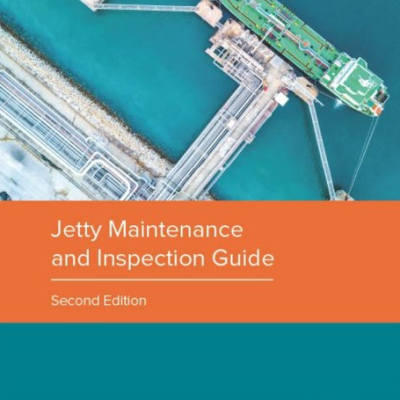
Jetty Maintenance and Inspection Guide

  • EDITION : 2nd,2023

  • PUBLISHER: OCIMF

  • LANGUAGE: ENGLISH

  • Reliable equipment at the jetty is vital for safe transfer of cargo between the ship and shore.

  • Maintenance of this equipment is particularly important because of the harsh environmental conditions often experienced.

  • This guide provides information on the basic function, failure, inspection, maintenance and repair of all the key equipment items and systems. It is not intended to provide guidance on safety management procedures or to replace the manufacturers’ instruction manuals. However, it is designed to provide a description of a typical jetty and the likely faults that may occur if maintenance work is not carried out regularly.

Mooring Equipment Guidelines (MEG4)

  • EDITION : 4th,2018

  • PUBLISHER: OCIMF

  • LANGUAGE: ENGLISH

  • Mooring Equipment Guidelines is an industry publication for the safe mooring of tankers and gas carriers at terminals.

  • The publication provides clear and concise guidance for ship and terminal designers, ship operators and mooring line manufacturers on safe mooring system design, with an emphasis on the safety of ship and terminal personnel.

  • This fourth edition has been extensively updated and addresses: – Lessons learned from incidents, most notably from failures of HMSF mooring lines; – Human centered mooring designs and human factors in mooring operations; – New and in-development regulations and guidance from the IMO on the safety of mooring; – Alternative mooring technologies and how they can be incorporated safely into the design of mooring systems both for ships and terminals.

Guidance Manual for Tanker Structures

  • EDITION : 2024

  • PUBLISHER: TSCF

  • LANGUAGE: ENGLISH

  • This consolidated edition combines in one guidance manual the various sources of information necessary for assessing the condition of the ballast tanks, cargo tanks and structure of tankers in service.

  • While the original manual mainly addressed the conventional single hull tanker, this revision includes IACS Recommendation No. 72: Confined Space Safe Practice Rev.3 Dec 2018 and IACS Unified Requirements (UR) Survey and Certification: Z10.4 Hull Surveys of Double Hull Oil Tankers (Rev.18 Feb 2023), where changes introduced in Rev.18 are to be uniformly applied by IACS Societies for surveys commenced on or after 1 July 2024. Phase-Out of Single Hull Tankers.

Passage Planning Guidelines

  • TITLE: Incorporating Safe Nav Watch and Teamwork on the Nav Bridge

  • EDITION : 8th,2023

  • PUBLISHER: Witherby

  • LANGUAGE: ENGLISH

  • Incorporating Safe Nav Watch and Teamwork on the Nav Bridge.

  • The fully updated 2023 edition of ā€˜Passage Planning Guidelines’ includes three separate publications presented in a slipcase.

  • These titles cover the latest procedures, guidance and best practice required for good navigational practice.

  • ā€˜Passage Planning Guidelines’ focuses on the Appraisal and Planning stages of voyage planning using traditional methods, paper charts and ECDIS, with fully worked examples throughout.

  • The 2023 edition has been updated to reflect the industry’s changing position on using ECDIS, and ENCs, as the primary means of navigation when passage planning. While still covering all the aspects of traditional paper chart navigation, this edition also includes a detailed overview of passage planning using ECDIS. Passage planning calculation examples are included to increase navigators’ familiarity, and imagery has been updated for both paper charts and ECDIS route planning examples.

  • ā€˜Safe Nav Watch’ provides guidance on safe navigational watchkeeping, highlighting potential hazards and how these can be avoided. The book contains guidance from experienced mariners, reinforced by best practice.

  • In this edition, all applicable SOLAS amendments and bridge equipment performance standards have been updated, alongside an in-depth review of the ā€˜Bridge Equipment’ chapter. New case studies have been added to the ā€˜Lessons from Navigation Incidents’ chapter, highlighting errors navigators have made on voyage and what the industry best practice is to prevent incidents from happening again. Chapter 5 – ā€˜Bridge Practices – Weather’ has also been expanded to incorporate tropical revolving storms, their locations and how to navigate safely when one forms.

  • ā€˜Teamwork on the Nav Bridge’ is based on original text from a leading trainer of cockpit resource management. The text has been fully revised and updated to reflect the key factors in bridge resource management, and why this is essential when forming the bridge team.

Passage Planning Guide

  • TITLE: PANAMA CANAL

  • EDITION : 2024-25

  • PUBLISHER: Witherbys

  • LANGUAGE: ENGLISH

  • This brand new passage planning guide is an expert resource for navigating the Panama Canal.

  • Written in consultation with the Panama Canal Authority (ACP), it includes A2-sized chartlets of the entire canal and essential information on every aspect of using both the Panamax and the Neopanamax locks.

  • Passage Planning Guide: Panama Canal and Approaches (2024 Edition) is the most comprehensive navigational guide to the Panama Canal to date. Written in consultation with the Panama Canal Authority (ACP) and their most senior pilots, it builds on the research and experience gained since the 2014 SIGTTO Guide to the Canal for LNG Carriers. The large format chartlets and supplementary navigational and procedural data in this new guide support Masters and officers in maintaining the highest safety standards in these constrained waters.

  • The user-friendly format of this publication will also help to ensure a successful transit for the increasing numbers of Neopanamax shipmasters, who may be completely unfamiliar with the canal due to changing patterns of global trade and the 2016 expansion of the locks.

Maritime Security

  • TITLE: A Comprehensive Guide for Shipowners, Seafarers and Administrations

  • EDITION : 1ST,2021

  • PUBLISHER: ICS & Witherby

  • LANGUAGE: ENGLISH

  • A Comprehensive Guide for Shipowners, Seafarers and Administrations.

  • This book provides a comprehensive guide to maritime security. Drawing on two decades of experience in the industry, it sets out the security threats faced by the shipping industry today, the statutory requirements that ships, shipping companies and port facilities must meet, and provides guidance on how to conduct a thorough threat assessment for a voyage.

  • A model ship security plan is also provided along with guidance on how to complete it in accordance with statutory requirements. It will be particularly useful to ship and terminal operators, seafarers and administrations, but will provide a useful entry point to the subject for anyone with an interest in maintaining the security of global trade.

Drug Trafficking and Drug Abuse On Board Ship – Guidelines for Owners and Masters on Preparation, Prevention, Protection and Response

  • EDITION : 2023 – 2024

  • PUBLISHER: ICS & Witherbys

  • LANGUAGE: ENGLISH

  • Guidelines for Owners and Masters on Preparation, Prevention, Protection and Response.

  • Drug trafficking is undertaken by sea because of the opportunities presented for high volume movements from producing to consuming countries.

  • Commercial shipping, unfortunately, can unwittingly play a significant part in the transportation of illicit drugs to the places where they are consumed. The shipping industry therefore shares a collective responsibility to assist in combatting this illegal traffic.

  • This requires shipping companies, and ships’ crews, to be constantly aware of the possibility that ships, and the cargo they carry, may be used as a cover for drug smuggling.

  • Drug abuse also presents a serious threat to ships’ crews, compounded by the direct connection between intravenous drug use and its associated health risks. It also exposes crews to the wider consequences of being associated with serious criminal activity, a particular danger in those parts of the world where the strict rule of law cannot be taken for granted or where the death penalty for drug trafficking still applies.

  • The guidance contained in this publication demonstrates how to protect the ship and the crew and reduce the risk of drug trafficking occurring on board. The publication covers: – Key global trafficking routes – Ports and places commonly targeted by drug traffickers – High profile drug seizures – Vulnerabilities of shipping – Risk management and security strategy – Ship security procedures – Port facility security procedures – Training and education – Emerging drug trends, including drug characteristics and identification – Responding to unusual activity at sea, in port, or involving passengers or crew – The signs of drug/alcohol use by crew members – What to do when drugs are found on board It also includes a new section on cyber security measures and drug trafficking in the COVID-19 era. Schemes, distinctive chart features, traffic hotspots, potential hazards, etc, which are essential considerations for a controlled and safe passage.

Piracy, Armed Robbery and Conflict at Sea

  • EDITION : 2024-25

  • PUBLISHER: UK Chamber Shipping & Witherby

  • LANGUAGE: ENGLISH

  • The Guide provides a comprehensive overview of the measures seafarers should take to protect against, prevent, respond and recover from an incident of piracy, armed robbery or conflict at sea.

  • Current threat profiles and up-to-date guidance is outlined, including the latest international and regional regulatory guidance, to aid seafarers in understanding the complexities of security challenges at sea and for each individual voyage.

  • The book details the security measures needed on board to protect against attacks, as well as how to create and implement a successful ship security plan, as required by the ISPS Code.

  • Practical security measures, including the creation of the citadel, are listed in detail, as well as international and national cooperation schemes in place. Advice for navigation and passage planning in areas of high risk is also given, alongside details of training programmes that should be in place for crew and onshore staff.

  • This Guide also provides step by step advice to be followed in the event of an attack on board, including ship damage mitigation measures, medical considerations, guidance for hostage situations and the preparation and response to missile, mine and drone attacks.

  • It also outlines considerations for the ship management team such as responding to ransom requests and media management and communication.

  • Annexes provided include useful reporting forms and reference checklists for each stage of an incident (protect, prevent, respond and recover).

Cyber Security Workbook for On Board Ship Use

  • EDITION : 5th,2024

  • PUBLISHER: BIMCO, ICS & Witherbys

  • LANGUAGE: ENGLISH

  • This is a practical and easy to understand guide to support the Master and the ship’s crew with cyber Safety risk management.

  • It provides detailed guidance on all aspects of cyber Safety protection, defense and response (including new sections on remote access, intrusion detection systems and engine department considerations).

  • It also includes comprehensive checklists to assist with the practical, day-to-day management of onboard cyber security.

  • In recent years, the shipping industry has undergone a digital revolution: internet connectivity on board has become common and ship’s systems are increasingly digitized and integrated. With this growing level of connection, comes greater risk.

  • Ships are now a common target for hackers and it has become crucial that the entire crew has an understanding of how and when cyber attacks can occur.

  • Using detailed, step by step checklists, Cyber Safety Workbook for On Board Ship Use provides a ship’s Safety Officer with the practical skills to identify cyber risks and to protect vulnerable onboard systems.

  • It also gives guidance on how best to detect, respond and recover in the event of a cyber attack.

  • This workbook will help to ensure that cyber risks are appropriately addressed in the onboard SMS (as required by IMO Resolution MSC.428(98)). It will also benefit shipowners, ship managers, ports and their IT departments.

Ballast Water Management, 14th Edition – Understanding the regulations, treatment technologies and practical information

  • EDITION : 14th,2023

  • PUBLISHER: Capt. Nadeem Anwar PhD & Witherby

  • LANGUAGE: ENGLISH

  • This 14th edition has been fully revised to reflect current requirements in the management of ballast water since ratification of the BWM Convention.

  • To assist ship owners with compliance, it sets out national and international ballast water legislation as well as Port State Control and ship administration requirements.

  • It includes practical considerations relating to system selection, installation/retrofitting, onboard operation, maintenance, monitoring and reporting.

Passage Planning Guide – Great Barrier Reef and Torres Strait 2023-24

  • EDITION : 2023

  • PUBLISHER: MIA Ltd., Auriga Pi., Witherby

  • LANGUAGE: ENGLISH

  • This publication has been revised to incorporate the latest guidance and practical advice for ships transiting the Great Barrier Reef and Torres Strait. All the data contained within this Guide has been reviewed and validated by Auriga Pilots, drawing on their considerable experience in all areas of the Marine Park and beyond.

  • It offers additional clarity on subjects such as maximum draught, ECDIS, ballast water management and Australian MARPOL areas. This is a valuable resource for any crew navigating the region.

  • In addition, a companion publication ā€˜Passage Planning Notes – South of Cairns, Whitsundays and Hydrographers Passage’ has been made freely available to downloadĀ here. This contains passage notes and chart lets for the following routes: South of Cairns – Whitsunday Passage – Hydrographers Passage

ITU List VIII

  • TITLE: List of International Monitoring Stations

  • EDITION : 2022

  • PUBLISHER: ITU

  • LANGUAGE: ENGLISH

  • FORMAT: CD

  • This List contains: 1) the addresses and other relevant information of centralizing offices and an index of monitoring stations; 2) particulars of monitoring stations carrying out the following measurements related to terrestrial radiocommunication stations: frequency measurements, field strength or power flux-density measurements, direction-finding measurements, bandwith measurements as well as automatic spectrum occupancy surveys; and 3) particulars of monitoring stations carrying out measurements related to space radiocommunication stations.

  • This publication also contains an electronic map of monitoring stations and geographical zones for HF broadcasting (CIRAF zones).

ITU List IV

  • TITLE: List of Coast Stations and Special Service Stations

  • EDITION : 2023

  • PUBLISHER: ITU

  • LANGUAGE: ENGLISH

  • FORMAT: CD

  • List IV contains important information for the mariner in relation to radiocommunications, including the GMDSS (Global Maritime Distress and Safety System).

  • Detailed information such as the frequencies for transmitting and receiving, in addition to geographical coordinates, is provided for maritime coast radio stations, including those assuming watch-keeping using digital selective calling (DSC) techniques and radiotelephony.

  • List IV also supplies details of additional services such as medical advice, navigational and meteorological warnings, MSI (Maritime Safety Information), AIS (Automatic Identification System), meteorological bulletins and radio time signals, along with the hours of service and operational frequencies, information on port stations, pilot stations, coast Earth stations,

  • VTS stations, contact information of RCC (Rescue Coordination Centers), SAR agencies, Navarea coordinators and AtoNs (AIS Aids to Navigation). As stipulated in Appendix 16 to the RR, this List shall be provided to all ship stations for which a Global Maritime Distress and Safety System (GMDSS) installation is required by international agreement.

ITU List V

  • TITLE: List of Ship Stations and Maritime Mobile Service Identity Assignments

  • EDITION : 2023

  • PUBLISHER: ITU

  • LANGUAGE: ENGLISH

  • FORMAT: CD

  • The List of Ship Stations and Maritime Mobile Service Identity Assignments (List V) is a service publication prepared and issued, once a year, by the International Telecommunication Union (ITU), in accordance with provision no. 20.8 of the Radio Regulations (RR).

  • As stipulated in Appendix 16 to the RR, this List shall be provided to all ship stations for which a Global Maritime Distress and Safety System (GMDSS) installation is required by international agreement.

ITU Radio Regulations

  • EDITION : 2020

  • PUBLISHER: ITU

  • LANGUAGE: ENGLISH

  • FORMAT: HARD COPY

  • The Radio Regulations, Edition of 2020, contains the complete texts of the Radio Regulations adopted by the World Radiocommunication Conference of 1995 (WRC-95) and reviewed by the subsequent World Radiocommunication Conferences: WRC-97 (Geneva, 1997), WRC-2000 (Istanbul, 2000), WRC-03 (Geneva, 2003), WRC-07 (Geneva, 2007), WRC-12 (Geneva, 2012), WRC-15 (Geneva, 2015) and WRC-19 (Sharm el-Sheik, 2019).

  • The ITU Radio Regulations facilitate equitable access to and rational use of the natural resources of the radio-frequency spectrum and geostationary satellite orbits.

  • They also ensure the availability of the frequencies provided for distress and safety purposes and assist in the prevention and resolution of cases of harmful interference between the radio services of different administrations.

  • Further, the regulations facilitate the efficient and effective operation of all radiocommunication services and, where necessary, regulate new applications of radiocommunication technology.

ITU Radio Regulations

  • EDITION : 2020

  • PUBLISHER: ITU

  • LANGUAGE: ENGLISH

  • FORMAT: DVD

  • The Radio Regulations, Edition of 2020, contains the complete texts of the Radio Regulations adopted by the World Radiocommunication Conference of 1995 (WRC-95) and reviewed by the subsequent World Radiocommunication Conferences: WRC-97 (Geneva, 1997), WRC-2000 (Istanbul, 2000), WRC-03 (Geneva, 2003), WRC-07 (Geneva, 2007), WRC-12 (Geneva, 2012), WRC-15 (Geneva, 2015) and WRC-19 (Sharm el-Sheik, 2019).

  • The ITU Radio Regulations facilitate equitable access to and rational use of the natural resources of the radio-frequency spectrum and geostationary satellite orbits.

  • They also ensure the availability of the frequencies provided for distress and safety purposes and assist in the prevention and resolution of cases of harmful interference between the radio services of different administrations.

  • Further, the regulations facilitate the efficient and effective operation of all radiocommunication services and, where necessary, regulate new applications of radiocommunication technology.

ITU Manual for Use by the Maritime Mobile and Maritime Mobile – Satellite Services

  • EDITION : 2024

  • PUBLISHER: ITU

  • LANGUAGE: ENGLISH

  • FORMAT: DVD

  • The Manual for Use by the Maritime Mobile and Maritime Mobile-Satellite Services is published in accordance with Article 20 (No. 20.14) of the Radio Regulations and results from studies carried out in the ITU-R since 2008. Volume 1 provides descriptive text of the organization and operation of the GMDSS and other maritime operational procedures, while Volume 2 contains the extracts of the regulatory texts associated with maritime operations.

  • A reference document that notes all the relevant rules or provisions from the ITU Radio Regulations that deal with maritime issues.

  • It provides the operational procedures that should be followed by a ship station or a coast station in case of a distress situation.

  • It also provides all the rules and procedures of the Global Maritime Distress and Safety System (GMDSS) – a collection of radio communications procedures and their supporting radio systems, which support maritime safety and the rescue of ships or crew during distress situations worldwide.

Passage Planning Guide – English Channel, Dover Strait and Southern North Sea 2024-25

  • EDITION : 8th,2023

  • PUBLISHER: UK Chamber Shipping & Witherby

  • LANGUAGE: ENGLISH

  • This Passage Planning Guide provides up-to-date information for the safe and controlled transit of ships through the English Channel, Dover Strait and Southern North Sea, covering passages to and from: MAAS/Rotterdam – Sunk/Thames – Wandelaar/Schelde – Elbe, Jade, Weser

  • The 2024-25 edition has been fully revised and updated with assistance from serving deep-sea pilots and leading industry organisations. It now includes guidance covering German Bight.

  • The Guide will be a valuable source of reference at every stage of the passage (appraisal, planning, execution and monitoring).

  • It highlights aids to navigation, traffic separation schemes, distinctive chart features, traffic hotspots, potential hazards, etc, which are essential considerations for a controlled and safe passage.

Suppression of Unlawful Acts (SUA) Conference

  • EDITION : 2nd,2007

  • PUBLISHER: IMO

  • LANGUAGE: ENGLISH

  • SKU: EA462E

  • The International Conference on the Suppression of Unlawful Acts Against the Safety of Maritime Navigation, 1988 (SUA Convention) reproduces the texts of the 1988 and 2005 Treaties, their consolidated versions and the Final Acts of the 1988 and 2005 Conferences.

  • Also included are the texts of the original Convention for the Suppression of Unlawful Acts against the Safety of Maritime Navigation (SUA), 1988 and its Protocol, the Final Act of the 2005 Conference, the two Protocols adopted by that Conference, as well as the consolidated text of the 2005 SUA Convention and the consolidated text of the 2005 SUA Fixed Platforms Protocol.

  • The purpose of these internationally agreed measures is to improve security and reduce the risk to the lives of passengers and crews on board ships.

Use of Sorbents for Spill Response

  • EDITION : 1st,2017

  • PUBLISHER: IMO

  • LANGUAGE: ENGLISH

  • SKU: I686E

  • This guide aims to provide practical guidance to operators that may consider the use of sorbents as part of response operations to accidental oil or chemical pollution. Subjects covered in the guide include sorbent types, specifications, particularities, regulations, deployment techniques, waste disposal and precautions of use.

Waste Assessment Guidelines

  • EDITION : 1st,2016

  • PUBLISHER: IMO

  • LANGUAGE: ENGLISH

  • SKU: I583E

  • Waste Assessment Guidelines under the London Convention and Protocol, 2021 Edition The Convention on the Prevention of Marine Pollution by Dumping of Wastes and Other Matter, 1972 (London Convention) and its more modern, self-contained 1996 Protocol (London Protocol) aim to protect the marine environment from all sources of pollution and, in particular, control and manage the dumping of wastes and other matter at sea.

  • This 2021 edition of the *Waste Assessment Guidelines under the London Convention andĀ Protocol* presents updated guidance to facilitate the implementation of the London Convention and London Protocol, including *Revised specific guidelines for the assessment of vessels* and *Revised specific guidelines for assessment of platforms or other man-made structures at sea*.

  • It also provides a list of additional guidance documents developed by the Contracting Parties, to further assist new and prospective Parties in the implementation of the treaties.

SOLAS Consolidated

  • EDITION : 8th,2020

  • PUBLISHER: IMO

  • LANGUAGE: ENGLISH

  • SKU: IG110E

  • Of all the international conventions dealing with maritime safety, the most important is the International Convention for the Safety of Life at Sea, better known as SOLAS, which covers a wide range of measures designed to improve the safety of shipping.

  • The Convention is also one of the oldest of its kind: the first version was adopted in 1914 following the sinking of the Titanic with the loss of more than 1,500 lives. Since then, there have been four more versions of SOLAS.

  • The present version was adopted in 1974 and entered into force in 1980. To provide an easy reference to all SOLAS requirements applicable from 1 January 2020, this edition presents a consolidated text of the Convention, its Protocols of 1978 and 1988 and all amendments in effect from that date.

  • Additionally, this edition includes Unified Interpretations to SOLAS regulations, which were adopted by the Maritime Safety Committee.

Ships’ Routeing

  • EDITION : 14th,2019

  • PUBLISHER: IMO

  • LANGUAGE: ENGLISH

  • SKU: IH927E

  • Both the safety of shipping and the cleanliness of oceans are promoted in many ways, one of which is the continuing development of routeing measures to control the navigation of vessels and to monitor their progress.

  • The measures that are described or defined in parts A and H of this publication are individually described in parts B (traffic separation schemes and inshore traffic zones), C (deepwater routes), D (areas to be avoided), E (other routeing measures, such as recommended tracks, two-way routes and recommended directions of traffic flow), F (the rules and recommendations on navigation that are associated with particular traffic areas and straits), G (mandatory ship reporting systems, mandatory routeing systems and mandatory no anchoring areas) and H (archipelagic sea lanes). This edition incorporates routeing measures that have been adopted before July 2019